
Ask your plant manager what they check before an order leaves, which customer request makes them stop and ask more questions, and where a custom order changes the process. Those answers show a buyer what working with you would actually be like. Film the answer and the one detail that proves it, side by side.
Your website probably says you care about quality. Most of your competitors' websites say it too. The plant manager can show what that word means in your shop, in terms a buyer can check.
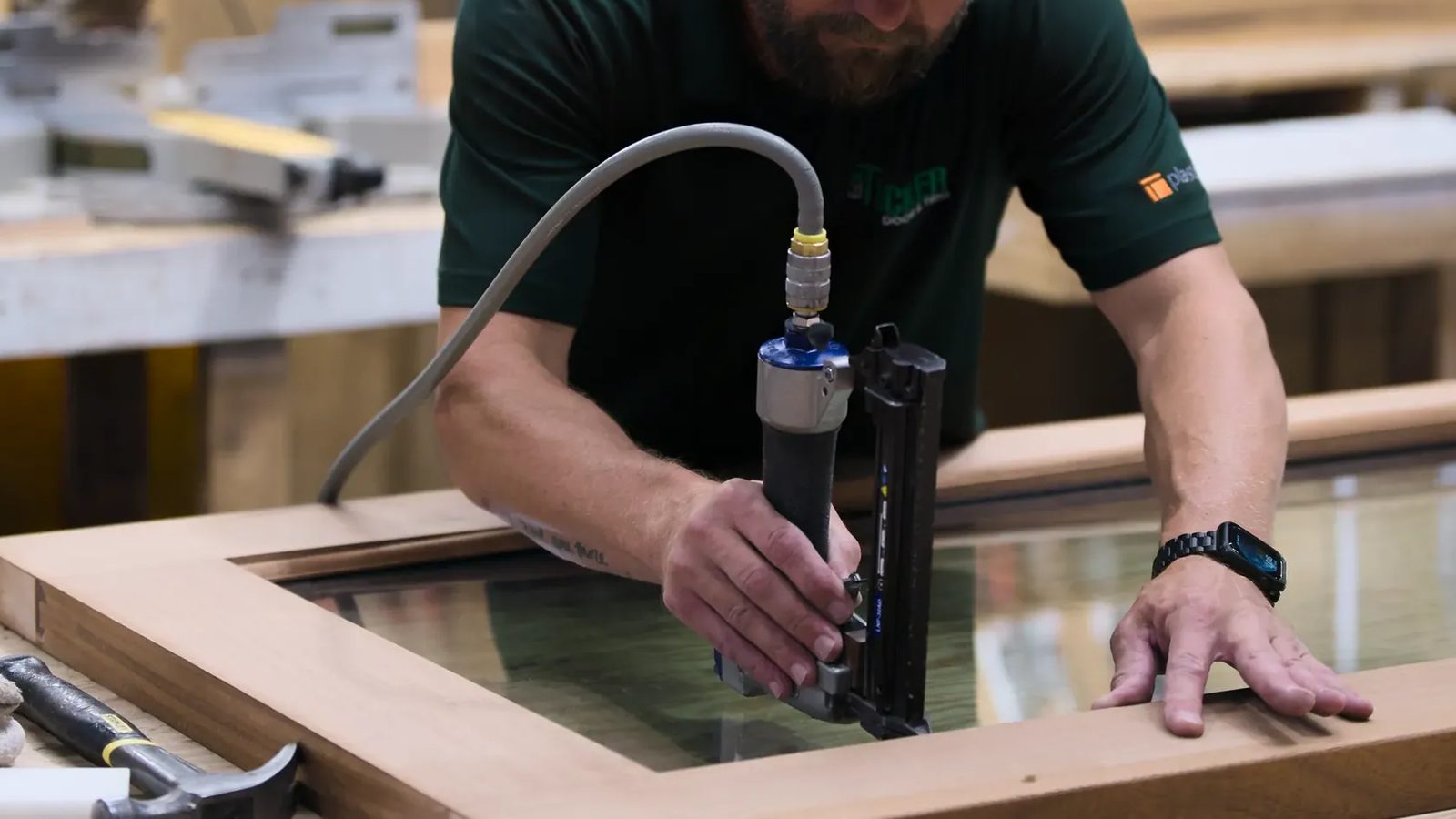
I hosted the Behind the Build episode on how windows are made at Tucker Door & Trim. Window Production Manager Chris Kotlowski showed us the glass cutter that gets the most pieces out of each sheet. He also showed us why curved glass is sometimes still cut by hand. A buyer learns more from that than from any shot of a machine running, because it shows where a custom order leaves the normal line and needs a person. Tucker Door & Trim is a Grit Blueprint client.
Find the Question Behind the Claim
"Quality" is a claim. A buyer still needs to know what to look for and why it matters. Your plant team can help you find that detail. You are explaining the part of your work that helps someone make a better buying choice. You do not need to publish a plant manual or show a process you want to protect.
Use these five questions to plan the interview and the footage together.
| Ask the plant manager | Film if cleared | Check before anyone uses it |
|---|---|---|
| What do customers leave off an order that changes it? | A blank sample form showing the field that matters. | No real customer's order, price, or address is visible. |
| What do you check that a buyer cannot see in a photo of the finished product? | The approved check and the detail being checked. | The expert explains what it shows, with no tolerance or test claim you cannot back up. |
| When is our product a poor fit for a job? | An approved sample or drawing that makes the limit clear. | The product and the use stay with the answer. |
| What does a new dealer need before quoting it? | The current public product sheet beside a sample. | The version is current. Keep computer screens off camera. |
| What can we show safely that makes this easier to understand? | One process step or finished detail the site lead allows. | The site lead approves access, camera spots, and what stays out of frame. |
These are shots to plan for. A machine running does not prove the quality of every product that comes off it. Show the check you can stand behind and leave out sweeping promises.
The most useful answer may be one the team thinks is too basic to mention. In the Tucker episode, the plain fact that a mistake on a one-of-a-kind window means a remake, and remakes take weeks, tells a buyer exactly why the order details matter. Let the buyer's question decide what belongs on the site.
Interview the Expert Before Anyone Writes the Page
Do not send the plant manager a blank document titled "Thought Leadership" and wait for it to come back full.
Bring one buyer question and ask for a spoken answer. Then ask the person to point to a safe example, drawing, sample, or finished detail that helps explain it. Film both, and keep the answer and that detail together in the edit.
Here is a made-up example. A buyer asks why two orders for products that look alike need different information before they can be quoted. A plant leader explains which project details change the order, what the customer should gather, and when an expert needs to review the request. Now the writer has a real job: make that explanation easy to follow without changing what it means. The writer does not get to invent tolerances, give install advice, or turn one example into a promise about every order.
Tell the Buyer Why This Person Can Answer
A name and a title help, but they should not carry the whole story. Say why this person can answer this question. Use their real role and what they are responsible for. A production lead, an engineer, and a service manager each see the work differently. Do not call everyone an executive just to make the page sound bigger.
Then let their judgment come through. What would they want the buyer to double check? What tradeoff would they explain? What would they ask before recommending an option? That gives the reader a reason to trust the person beyond a polished headshot, and it lets your company show what it knows through more than one voice.
Put the Answer Where Buyers Will Look
Give the answer a home that matches the question. A question about choosing a product may belong on a product page. An ordering question may belong in a buying guide. A bigger decision may need its own article, linked from the right product or service page.
Keep the main answer in text a buyer can read. The video can show the work, but no one should have to watch eight minutes to find one instruction. Add captions and a short written version.
Put the next step beside the answer. That might be gathering project details, reading the current product documents, or talking to the right person. Do not send every technical question to the same vague contact button.
Have the expert review the final words and pictures before anything goes up. Then name someone to check the page whenever products, roles, or steps change.
Choose One Question This Week
Ask sales for one question that slows a real buying conversation. Take it to the person best able to answer it. Record a short internal interview with their OK, then decide what can be shared. You may come away with a better product page, a useful article, or a short clip a rep can send before a call. You may also find the answer needs more work before it goes public, which is worth knowing too.
If you are deciding which story to film first, use this scorecard for choosing the next customer story. To see how Grit Blueprint plans and films these shoots, look at plant tour video production and the Tucker Door & Trim story.
Questions and Answers
Ask what customers leave off an order that changes it, what they check that a buyer cannot see in a photo, when the product is a poor fit, what a new dealer needs before quoting, and what you can safely show that makes the answer easier to understand.
It should show one check or one step a buyer cares about, with the person who does it explaining why it matters. A machine running looks good but proves little. Pair each spoken answer with the detail, sample, or drawing that backs it up, and keep both in the edit.
Real customer orders, prices and addresses, private screens, protected processes, and any tolerance or test claim you cannot back up. The site lead should approve access, camera spots, and what stays out of frame, and the expert should review the final cut before it goes up.
Put it where the question gets asked. A product question goes on the product page, an ordering question in a buying guide, and a bigger decision in its own article. Keep the main answer in readable text, add captions to the video, and put the next step beside it.
Want Help Putting It to Work?
A free call with Stefanie Couch. About 30 minutes.
Not ready to talk? Get the Built to Win Newsletter

Written by Stefanie Couch
Founder of Grit Blueprint and the front-facing voice of the brand. Stefanie helps companies across the building industry turn hard-earned trust into visible proof, useful content, and AI-search-ready authority. Known on stage, on the mic, and for her signature pink hat.