
A manufacturer's homepage should help buyers understand the product and how to specify or buy it. A distributor's homepage should explain the lines it carries, the area it serves, and the help it gives the trade. A dealer's homepage should help local buyers see what they can buy, where to go, and who can help. Each one starts with the buyer's question and ends with a next step your team can really handle.
"Quality products and great service" leaves all three jobs undone.
In building products, your place in the sales channel changes what you can promise. You may make a product without selling to the person reading your page. You may distribute a line without stocking every option. You may show a product in one showroom but not another. The top of your homepage has to tell buyers where they landed and help them take the right next step.
What Should a Manufacturer's Homepage Say?
A manufacturer may be talking to dealers, architects, builders, and homeowners on the same site. Pick the main buyer for the top of the page. Then give everyone else a clear path.
The top of the page should answer four questions. What do you make? Where is it meant to be used? What backs up that fit? How does someone specify it or buy it?
Keep performance claims as narrow as your documents. If a rating applies to one series or one tested setup, say where buyers can check it.
Here is a made-up opening for a fictional door maker:
Interior wood doors for residential projects. Compare our door series, see the designs, and find current product documents. For sizing and spec questions, contact our technical team. Button: Explore door series.
It tells the buyer what the company makes and where to begin. It does not suggest every size or design is available. If architects are the main buyer, the button might point to spec help instead. If finding new dealers is the goal, the top of the page has a different job. Make that choice before you polish the headline.
What Should a Distributor's Homepage Say?
A distributor's buyer often knows the brand already. Their questions are about access and getting the order done. Which lines do you carry? Which area do you serve? Who helps with an order or a technical question? What should a new dealer know before asking for an account?
Be exact about what is available. "We carry this brand" does not tell a dealer if an item is stocked, special order, or sold in their area.
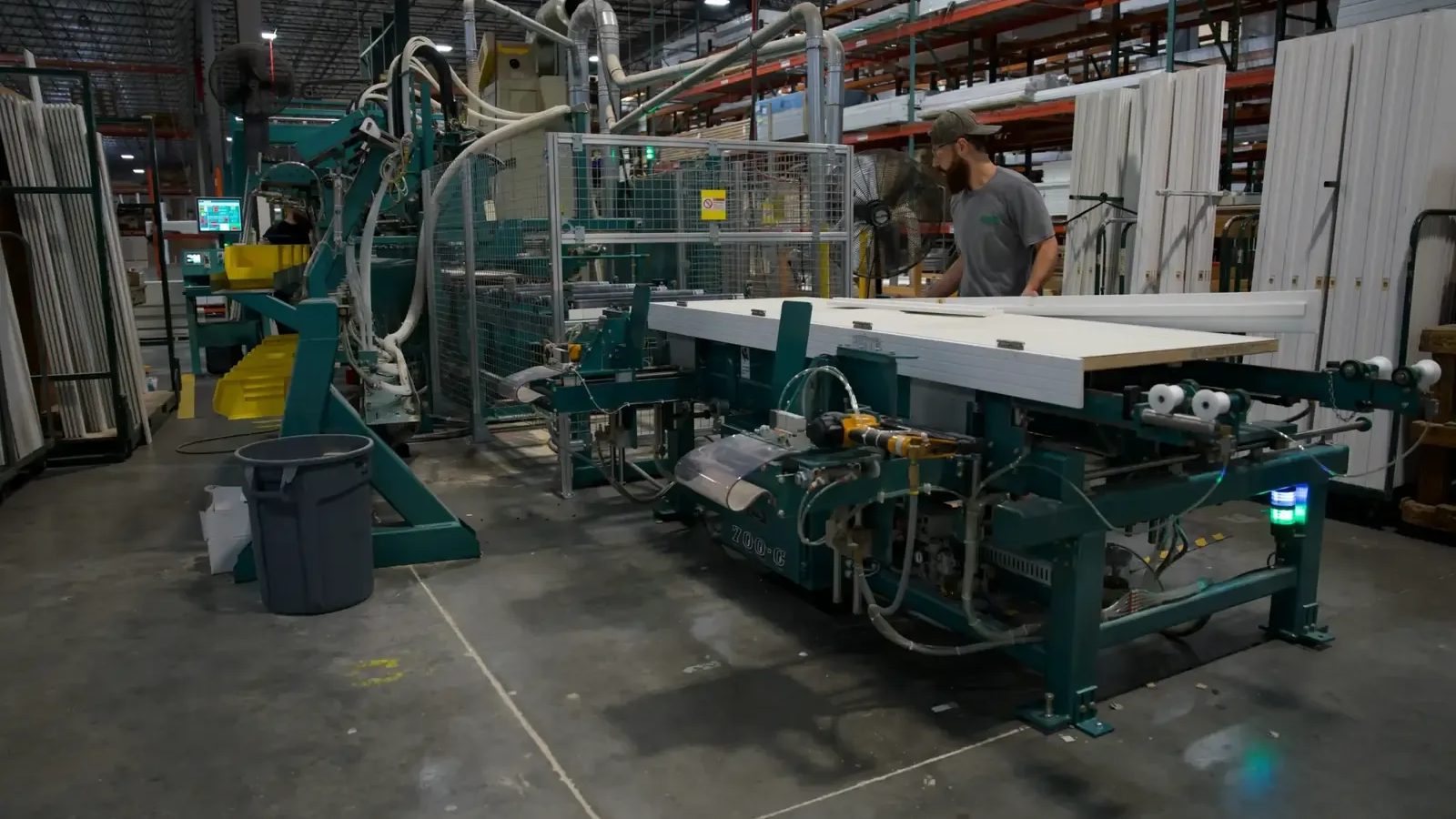
Here is a real example. Tucker Door & Trim is a two-step distributor and manufacturer that sells only to dealers, lumberyards, and one-step distributors. When Grit Blueprint rebuilt its website, the team first sat down with Tucker's leadership, sales, customer service, and support. They asked what dealers call about, what they search for, and what would save them a phone call. The homepage now names the dealer audience in the first line. The headline dealers see first is "Fill the everyday orders. Win the hard ones." Under it is the promise Tucker has kept since 1967: built in its own plants and delivered on its own trucks. You can see the before and after in the Tucker Door & Trim story.
If you are a distributor without a promise like that ready, a plain opening still works. Here is a made-up one:
Doors and millwork for dealers in our service area. Find the lines we distribute and the branch that serves your business. Our team can confirm what is available and help with order questions. Button: Find your branch.
Swap "our service area" for the real states or counties you serve before you publish. Notice what it does not say. It does not promise every product is in stock or that every order ships the next day. Those lines need current proof from operations.
What Should a Dealer's Homepage Say?
A dealer's homepage should help a buyer picture the next visit or call. If you have a showroom, say who it serves and how to use it. If your main customers are builders buying packages, show them the quote path. If you serve homeowners and trade buyers, help each one find the right door in.
A made-up dealer opening:
Compare windows and doors at our local showroom. Bring your plans, project questions, or photos of the opening. Our team will help you compare the lines we carry and explain what we need for a quote. Button: Plan your showroom visit.
This assumes the showroom takes that kind of visit and offers that help. Confirm both. If visits need an appointment, say so. If you do not measure openings, do not let the copy suggest you do.
Put the Right Proof Under the Promise
Pick proof that answers the buyer's next doubt.
| Your role | The buyer's likely doubt | Proof to put near the top |
|---|---|---|
| Manufacturer | "Does this line fit my project?" | The right series details and a current technical document |
| Distributor | "Can this company serve my account?" | The real territory, a branch contact, and how ordering help works |
| Dealer | "Will this visit help me choose?" | Current showroom photos, the lines on display, and visit details |
A photo of an impressive building shows where a product was used, but it says nothing about a rating. A row of brand logos shows who you work with, but not what is in stock today. Put each piece of proof under the claim it backs up.
What If Your Company Plays More Than One Role?
Some companies make and distribute. Some dealers serve homeowners, builders, and other trade buyers. You do not have to force the whole business under one label. Start with the main task and show the split early. For example, a made-up pair of routes:
- Buying for a project? Find product and quote help.
- Buying for your dealership? Find account and distribution details.
Use your buyers' own words and the handoffs your team can really support. A short explanation beats sending everyone to one form and asking a rep to sort it out later. For how to set up those buttons, see dealer locator or get a quote.
Write Your Own Opening With This Card
- We make, distribute, or sell:
- The main buyer on this page is:
- That buyer needs to decide:
- We can back up this promise with:
- The important limit or exception is:
- The next step we can really handle is:
Now write a headline, two sentences, and one main button. Give it to someone who answers customer calls. Ask what a buyer might get wrong. If the homepage says the right thing but the next page loses the buyer, fix that page too. Five tests a buyer should pass on your website can help you check the whole path.
Questions and Answers
Say what you make, where it is meant to be used, what backs up that fit, and how someone specifies or buys it. Pick one main buyer for the top of the page and give other buyers a clear path. Keep performance claims as narrow as your documents.
Name the lines you carry, the area you serve, who helps with orders and technical questions, and what a new dealer needs to know before asking for an account. Be exact about availability. Carrying a brand does not tell a dealer whether an item is stocked or special order.
Help a local buyer picture the next visit or call. Say who your showroom serves and how to use it, show builders the quote path, and help homeowners and trade buyers each find their way in. Confirm any service the copy implies, like measuring.
Proof that answers the buyer's next doubt. For a manufacturer, series details and a current technical document. For a distributor, the real territory and a branch contact. For a dealer, current showroom photos and visit details. A row of logos does not prove what is in stock.
You do not need one label for the whole business. Start with the main task and show the split early, for example one route for people buying for a project and one for people buying for a dealership. Use your buyers' words and the handoffs your team can support.
Want Help Putting It to Work?
A free call with Stefanie Couch. About 30 minutes.
Not ready to talk? Get the Built to Win Newsletter

Written by Stefanie Couch
Founder of Grit Blueprint and the front-facing voice of the brand. Stefanie helps companies across the building industry turn hard-earned trust into visible proof, useful content, and AI-search-ready authority. Known on stage, on the mic, and for her signature pink hat.