

The price of a website for a building supply company depends on seven things: how many product lines and pages you need, photos and film, your logo and brand, catalog and vendor content, how many locations and brands you have, who writes the words, and what happens after launch.
Why Is There No Price on This Page?
Two websites can sound like the same job and be two different ones. One site is a handful of pages. The site we rebuilt for Coffman Stair Parts holds about 4,500 products. One price can’t be fair to both.
The first call is free, takes about 30 minutes, and is with Stefanie Couch, our founder. We agree on the scope and the price with you before any work starts.
What Makes a Website Project Bigger or Smaller?
For each of the seven, here is what to look at in your own business and a real example from our work.
How Many Product Lines and Pages Do You Need?
Every product line you want buyers to find needs its own page. A yard that sells lumber, doors, windows, decking, and hardware needs more pages than a shop that sells one thing.
Count the lines you sell, the services you offer, and the kinds of buyers you serve. That count is a good first guess at the size of your site.
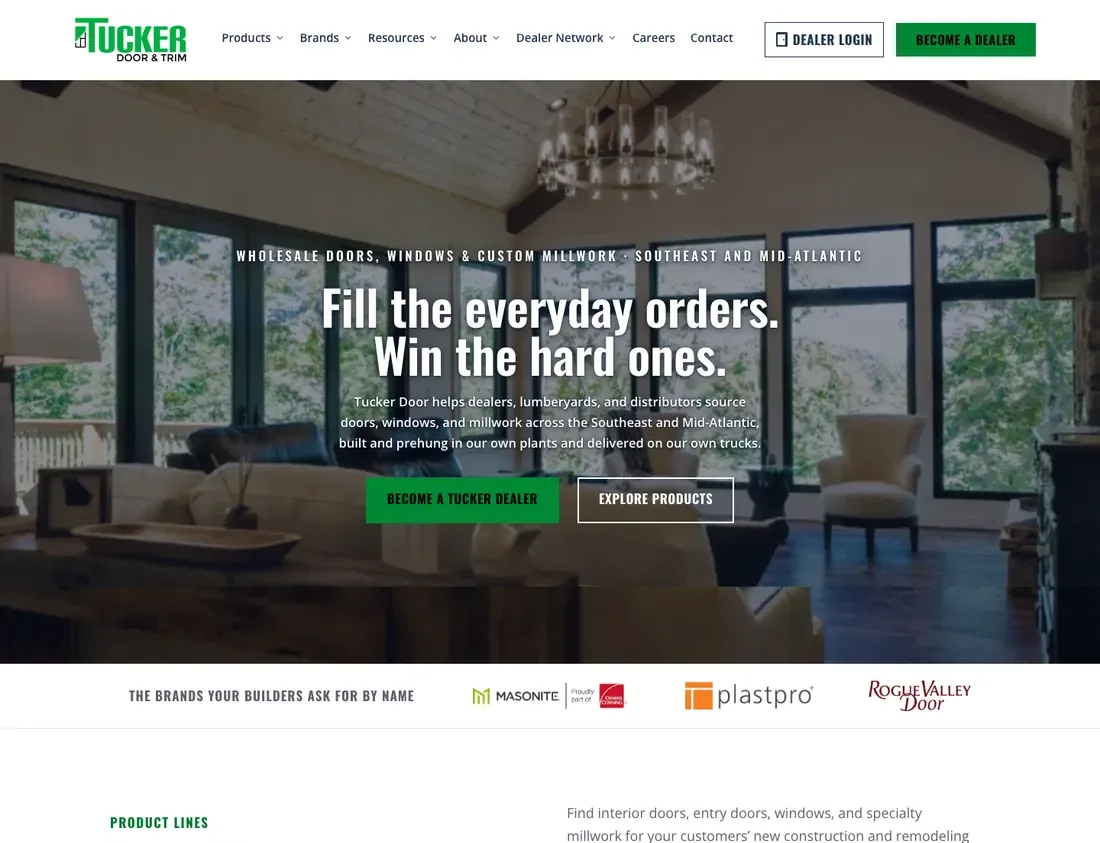
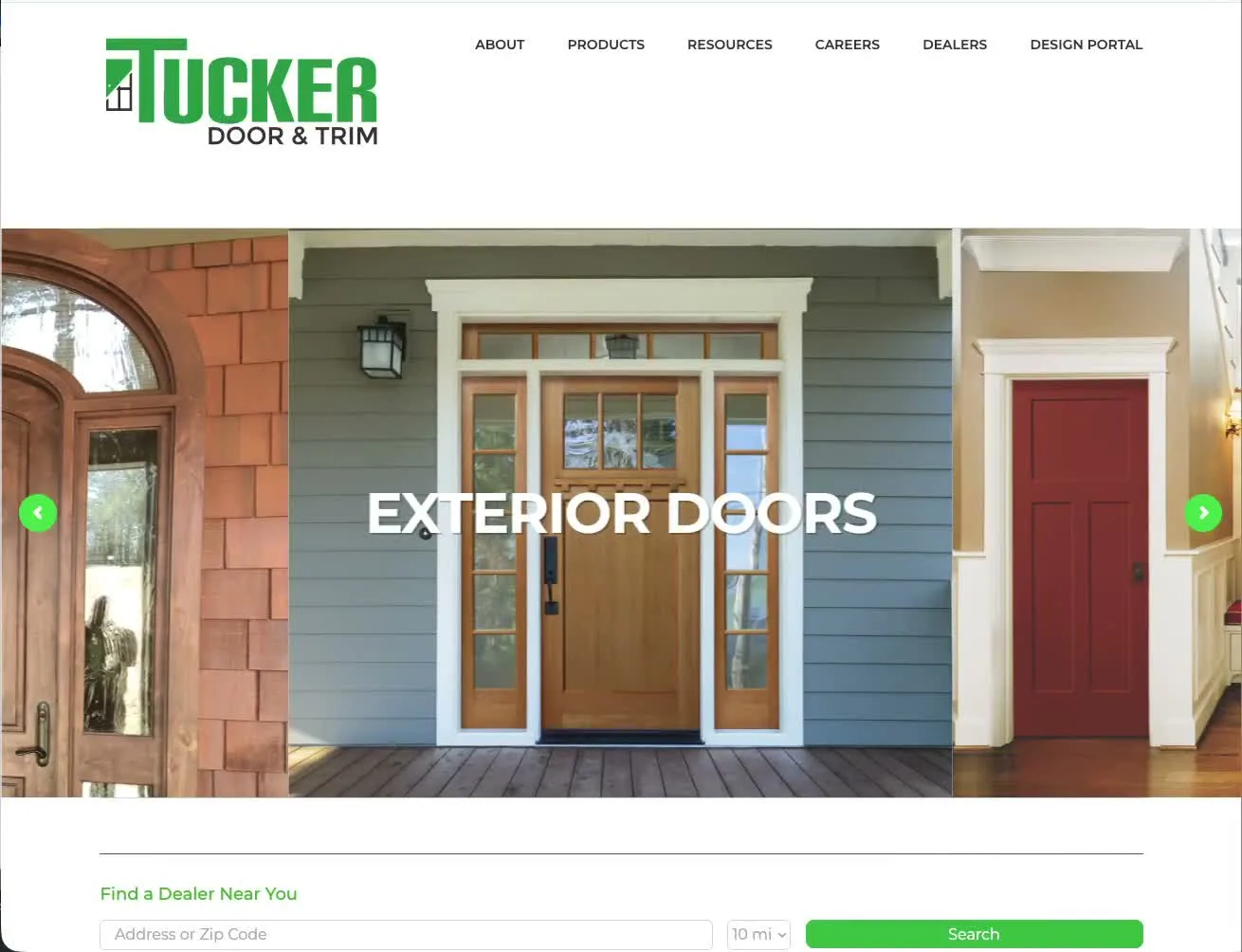
Tucker Door & Trim is a two-step distributor and manufacturer in Monroe, Georgia. Its site sorts products by category and by brand. It also has door styles, plant pages, delivery information, and a dealer application. That is a lot of pages, because Tucker sells a lot of things.
Do You Need Photos and Film?
Photos and film can be a big part of the job. If you already have good photos of your own people, yard, and jobs, and you have the right to use them, the job is smaller. If all you have is vendor photos, someone has to come take real ones.
Tucker’s old site ran on stock photos. Our crew photographed and filmed the Monroe plant, three jobsites, and the people who work there. There is not one stock photo on the site now.
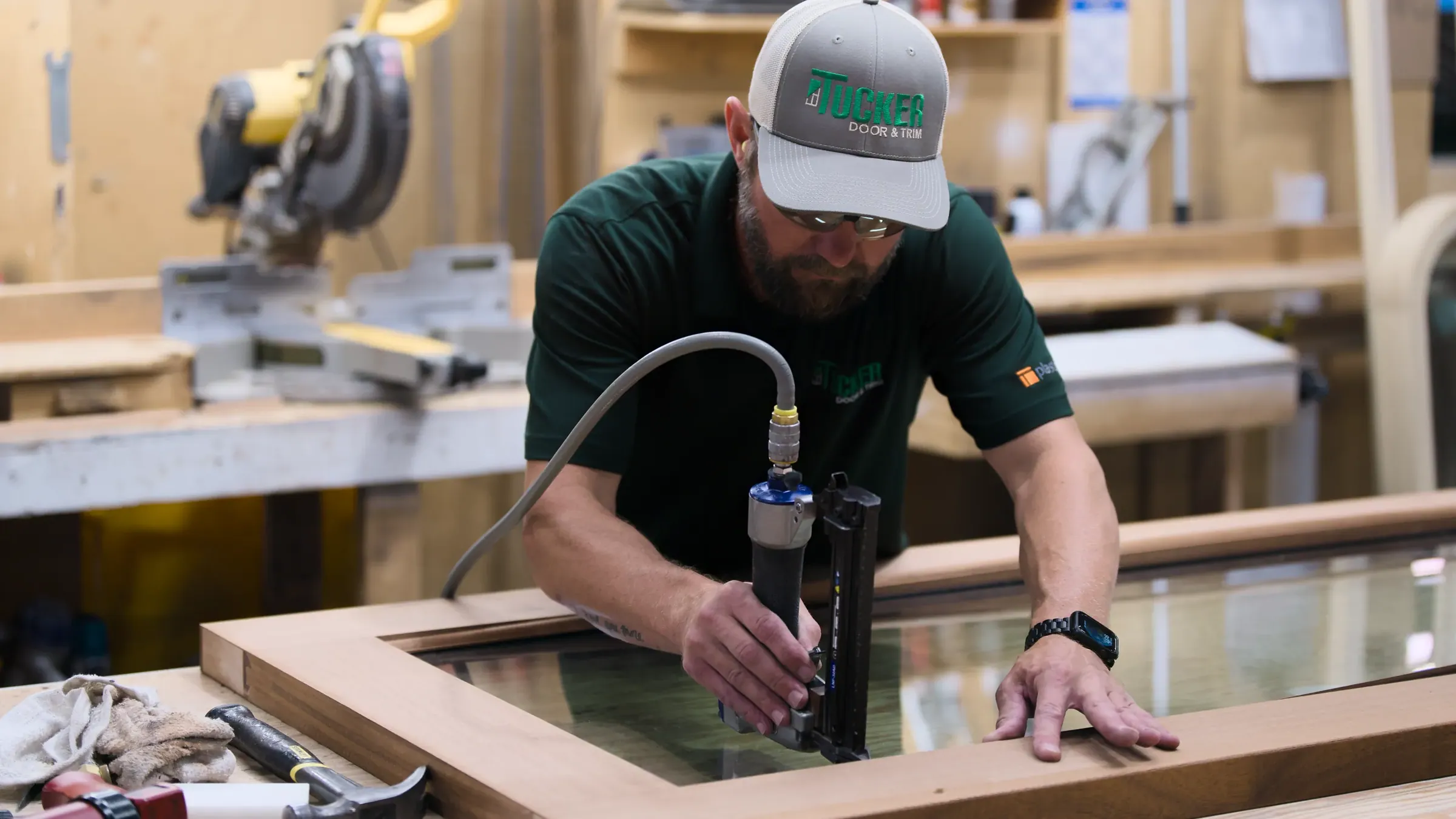
Ask any agency who takes the pictures. Our own crew takes ours.
Does Your Logo or Brand Need Work First?
A website uses your logo, your colors, and your fonts on every page. If those are about to change, change them first. If your name is changing, that comes first too.
If customers already know your logo, you may only need a cleanup. That is a smaller job than a new brand.
TLC Elite in Dawsonville, Georgia, used to be The Liquidators Company. When the name changed, we redesigned the logo, built a brand kit, and carried the new name across the website.
Not sure which comes first? Read Should You Rebrand Before a New Website?
How Much Catalog and Vendor Content Is There?
A site that lists a few product lines is one job. A site with a full catalog is a bigger one. Every product needs a name, a picture, and its details, and someone has to gather all of it.
What you want buyers to do matters too. Reading about a product, asking for a quote, and buying online are three different builds. Here are four we made.
- Coffman Stair Parts. About 4,500 products, rebuilt as an online store from the product information on the old site.
- WindowCrafters. A store for stock windows, where a customer can compare sizes and prices, plus a quote request for custom work.
- TLC Elite. A catalog where buyers pick products and send a quote request.
- Architectural Door & Millwork. A site that leads dealers to its quoting tool, ADAM Q.
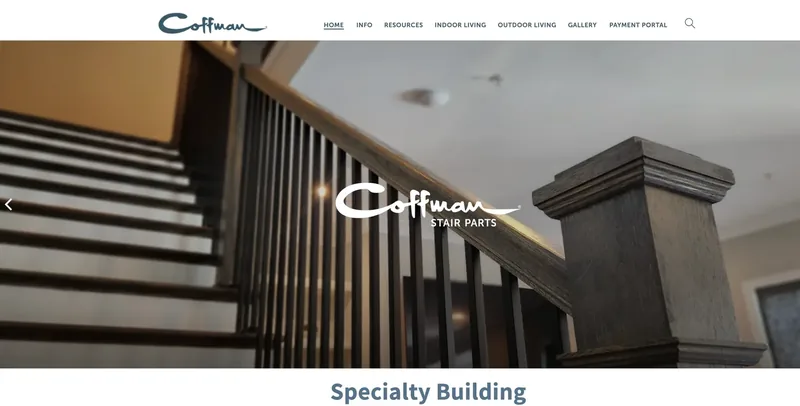
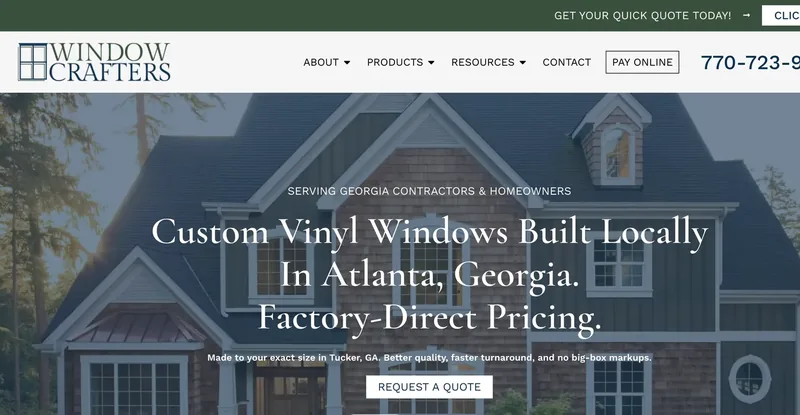
On our projects we take care of the vendor pictures and product details. We have been selling these products for decades, so you won’t have to teach us your product lines.
How Many Locations and Brands Do You Have?
Each yard, store, or plant may need its own page, with its own address, hours, and people. More than one brand can mean more than one website.
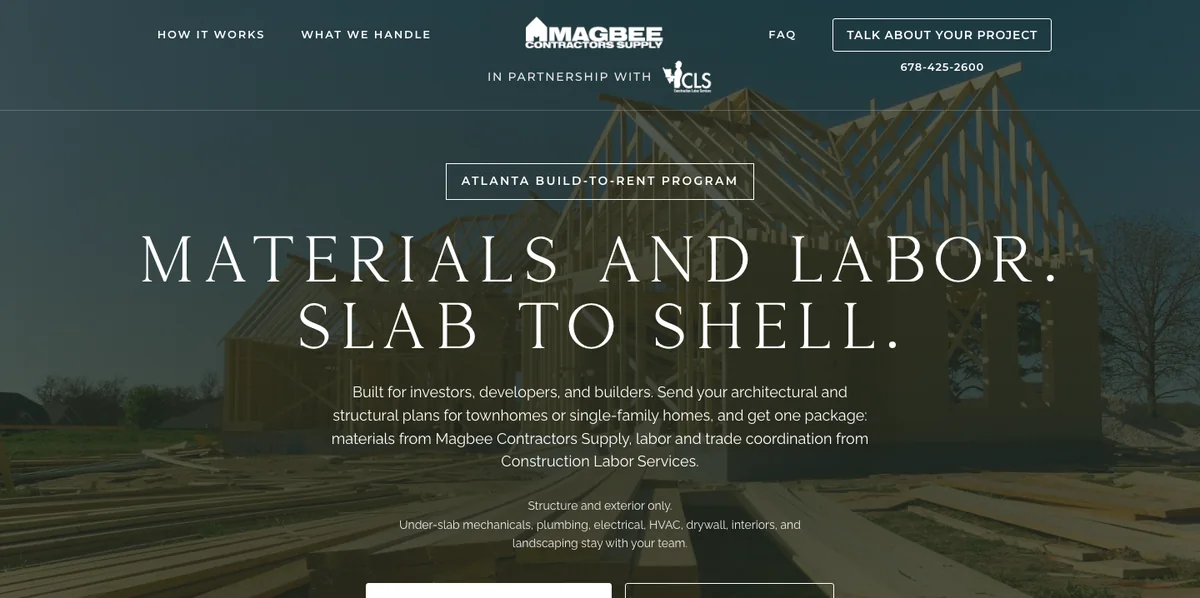
Magbee Contractors Supply in Winder, Georgia, sells to production builders and to luxury buyers. Those buyers need different things, so each got its own brand and its own website. The build to rent program got a site too. That is three websites for one company.
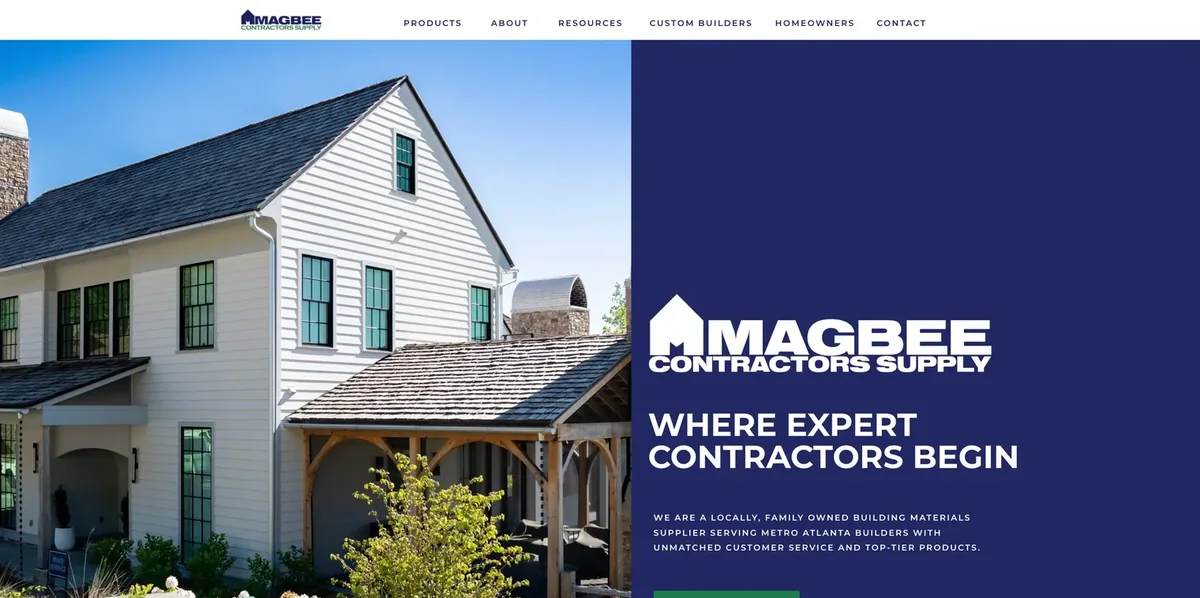

“Stefanie and the Grit Blueprint team provided marketing and two complete website rebuilds for our main and millwork brands.”
Who Writes the Words?
Someone has to write every page. If the agency writes, that is part of the job. If you write, the job is smaller, but the project waits on you.
Ask how many people at your company need to approve the words. More reviewers means more rounds.
On our projects, we write the site. Your part is one setup call where we ask a ton of questions.
What Happens After Launch?
Two things can follow a launch, and each is agreed on its own.
- Hosting and routine upkeep. Keeping the site running and up to date.
- New content. New pages, articles, and posts after launch. We call that an Ongoing Content Package.
Ask any agency which of these is in the price and which is extra. We name which ones you are buying, so nothing is assumed.
Do You Need a New Site at All?
Maybe not. If your current site can do the job, the smaller project is to fix the pages that need work.
We rebuild only when the way the site is set up gets in the buyer’s way. You hear which it is before you agree to anything.
What Does Grit Blueprint’s Process Include?
Our website process has three steps: one setup call, a homepage mockup you approve, then we build the whole site. The scope and the price are settled before the first step.
Asking more than one company for a price? Read What to Put in a Website RFP for Your Building Products Company.
What Should You Ask Any Agency Before You Sign?
These six questions work with anyone you hire, including us. Get the answers in writing.
- What is in the price, and what would cost extra?
- Is the scope written down before work starts?
- Are photos and film included, and who takes them?
- Who writes the words, and who loads the products?
- What will we see and approve before the whole site is built?
- After launch, who hosts the site, who updates it, and what does that cost?
For questions that are not about price, read How to Choose a Building Materials Marketing Agency.
What If Marketing Money Has Been Wasted Before?
Then be careful, and ask to see the work first. Jeff Martin of Fortress Building Envelope Consulting felt the same way before he hired us.
Quick Answers
How much does a website cost for a building supply company?
It depends on the size of the job. Seven things set the size, and each one is explained above.
Why doesn’t Grit Blueprint list prices?
Two website projects can differ a lot in size, so a number without your details would be a guess. The price is agreed with you before any work begins.
How long does a website take?
It depends on the project. The average site takes about three months. Your proposal names the timing.
Can we hire Grit Blueprint for just a website?
Yes. You can hire us for the website alone. You don’t need an Ongoing Content Package to start.
Should we bring a budget to the first call?
If you have a budget range or a deadline, share it. If you are still working that out, tell us what needs to change in your business.