
Film the answers to the questions your reps get, along with the finished project. Before the shoot, ask reps what they wish they could show a buyer. Then get the wide shot, the close detail that answers the question, and the person who made the choice explaining why. Name each clip after the question it answers.
Picture a rep on the phone with a builder. The builder wants to know how a product looks at a tricky corner, what the crew needs before it arrives, or why the last job went so well. The rep has a two-minute company reel and a folder full of photos. Neither one answers the question.
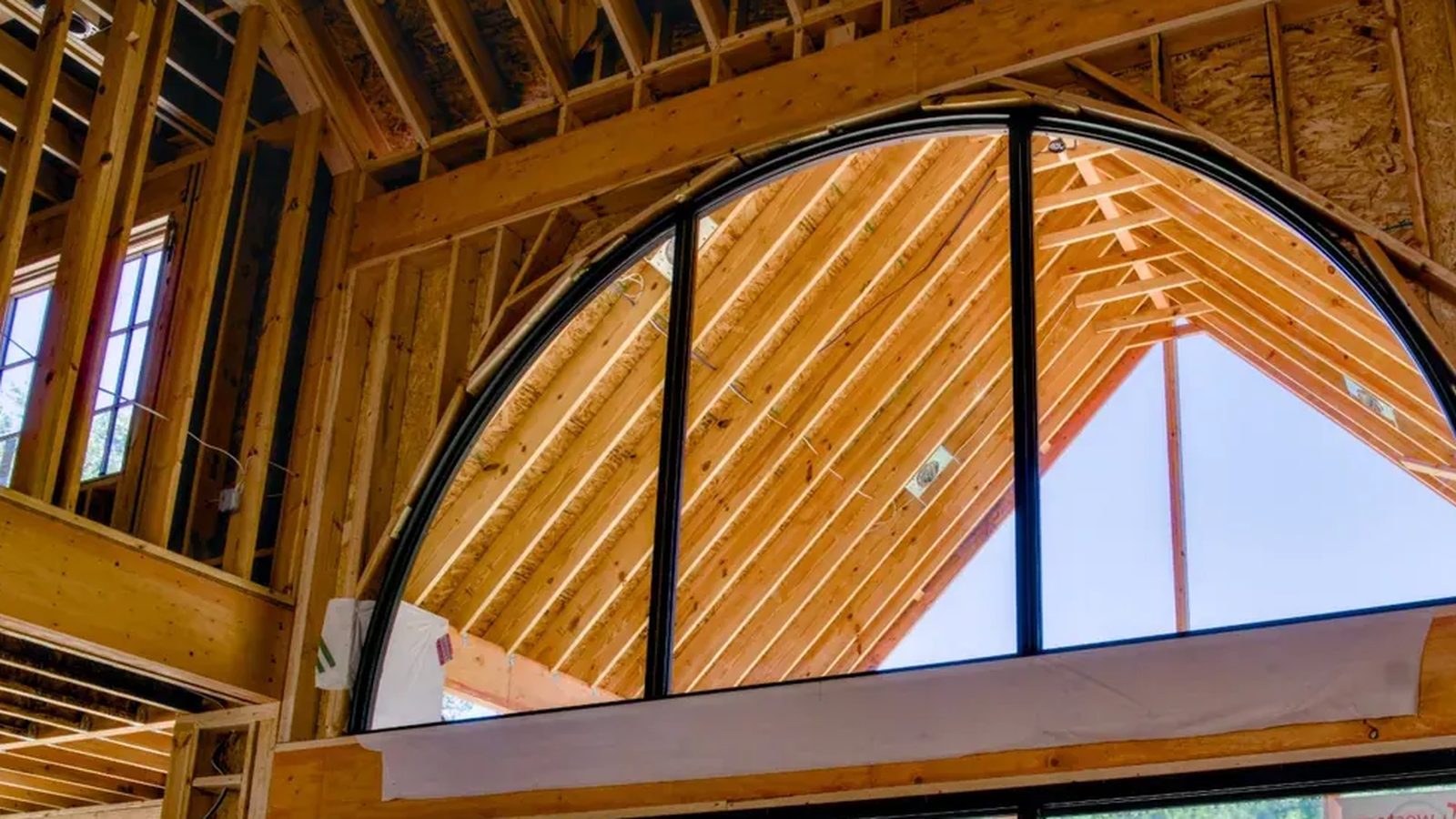
In the Behind the Build episode on how windows are made at Tucker Door & Trim, we followed one custom trapezoid window. It went from the Tucker plant to Reeves Building Supply in Clayton, then on to a jobsite in Cleveland, Georgia, where Wilkinson Construction Management installed it. For a rep, the useful part is seeing where the shop, the dealer, and the installer each come in, more than the finished house. Tucker Door & Trim is a Grit Blueprint client.
Separate the Pretty Shot From the Useful Shot
Get the wide shot. Show the finished work so people can see the whole project. Then get close enough to show the thing that matters.
If builders keep asking where two materials meet, show that joint from two angles. If a dealer is trying to explain how a custom door changes the feel of an entry, show the door in place, then the detail they are talking about. If freight or unloading comes up often, a finished house photo cannot do that job. Plan to film a real delivery on a separate visit. Never stage one and present it as the real thing.
Before you load the truck for the shoot, write a short list.
- What is the buyer's question?
- Who can answer it on camera?
- What does the buyer need to see to understand the answer?
- What are we allowed to show and share?
That list does more for you than "get plenty of footage."
Match Each Shot to the Question It Answers
For a window or door project, a shot list might look like this.
| Shot | Buyer question it can answer | What has to go with it |
|---|---|---|
| Wide view from the driveway | How does it fit the house? | Project details and permission to show the property. |
| View from inside the room | How does the frame or opening look from here? | The product name, the lighting, and a reminder to use the real finish sample. |
| Close view of one approved detail | What is different about this choice? | An expert's explanation of that detail, with no guessed performance claim. |
| The person who made the choice | Why did this option fit this job? | Their approved words and what made the choice specific to this job. |
If a detail cannot be shown safely, or the owner has not cleared it, leave that shot out. Do not fill the gap with a stock image that looks like the project.
Let the Person Who Did the Work Explain One Choice
Ask the crew lead, dealer, builder, or product specialist to point to something the camera can see. Then ask why it is there. "What did you choose here, and why?" is a better start than "Tell me about the project." You can also ask what another crew should know before doing a job like this, or what a builder should ask before ordering for this kind of opening.
Get the answer in their own words. Then confirm which details were specific to that job. One crew's approach is not an install guide. If the answer depends on a product, a site condition, a code, or an approved install method, keep that context with it. Let the right person check the finished cut before anyone shares it.
Send Your Reps Something They Can Find
Here is a made-up example. Say a window rep keeps hearing, "Can you show me what that dark frame looks like from inside the room?" From a project where you have permission, send the rep one short clip and two photos: the view into the room and a close view of the frame in the same light.
Name it after the question: Dark window frame: view from inside. Add one line the rep can use: "Here is how the dark frame looked on this project. It is a good way to see the profile in a room, but let's use the real finish sample for your color choice."
That is much easier to use than a folder named "Final Jobsite Assets." The buyer gets an answer, and the rep still has room to explain what might be different on their job. To decide which pieces your reps need in the first place, see what building products reps need beyond the brochure.
Give Each Piece a Place to Work
You do not need to cut every shoot into ten posts. Make what solves the problem.
- For a rep: one clip or photo they can send when the question comes up.
- For a product or service page: a project photo or short story that proves one point, next to the details the buyer already needs.
- For a project story: more room to show the people, the problem, what they chose, and what they can stand behind.
- For your team: a one-line note on each piece saying who it is for, when to use it, and whether it is cleared for one-to-one sharing, public use or both.
Before you film again, ask your reps which piece they used and what question they still could not answer. Use what they tell you to plan the next shoot.
If you have a plant, showroom, or jobsite worth showing, start by writing down three questions your sales team gets every week. That makes a better shoot brief than "we need more content." When you want a crew to film it, see Grit Blueprint's photo and video production.
Questions and Answers
Film the questions reps get. Get the wide shot of the finished work, a close view of the detail that answers the question, and the person who made the choice explaining why. Ask reps before the shoot what they wish they could show a buyer.
Name each clip after the buyer question it answers, such as "Dark window frame: view from inside." Add one line the rep can send with it and a note on who it is for, when to use it, and whether it is cleared for one-to-one sharing, public use or both.
Do not stage one and present it as real. If freight, unloading, or install comes up often, plan to film a real delivery on a separate visit. If a detail cannot be shown safely or the owner has not cleared it, leave that shot out instead of using a stock image.
The person who made it: the crew lead, dealer, builder, or product specialist. Ask them to point to something the camera can see and say why it is there. Confirm which details were specific to that job, and let the right person check the cut before anyone shares it.
Want Help Putting It to Work?
A free call with Stefanie Couch. About 30 minutes.
Not ready to talk? Get the Built to Win Newsletter

Written by Stefanie Couch
Founder of Grit Blueprint and the front-facing voice of the brand. Stefanie helps companies across the building industry turn hard-earned trust into visible proof, useful content, and AI-search-ready authority. Known on stage, on the mic, and for her signature pink hat.