Your buyers are researching you right now.
Not on Google. In ChatGPT.

If you’re not showing up in those answers, someone else is.
The way people find and choose building materials companies has changed due to advancements in ai search. Most companies haven’t noticed yet.
TLDR
- Buyers are using AI tools like ChatGPT to research building products. They ask detailed questions, not keywords.
- AI shows fewer results than Google. If you’re not in the answer, you’re invisible.
- This week: Search for your products in ChatGPT or Perplexity. See if you show up. That tells you everything.
This Already Happened in North Georgia
The Liquidators Company is a door and window company in Dawsonville, Georgia.
Before we started working with them, they had no content on their website. No blogs. No product guides. Nothing that helped search engines or AI tools understand what they sell or who they help.
We rebuilt their website. Added e-commerce. And started writing blogs. Product guides. Content that answers the questions homeowners and contractors actually ask.
Nine months later, a customer walked in and bought $15,500 worth of doors and windows.
The owner asked how they found out about them.
The customer said, “I searched for you on ChatGPT, and you came up.”
That’s a $15,500 sale from an AI search.
This is not a theory. This is happening now.
The Liquidators Company figured this out fast.
Most companies in this industry haven’t.
Why Search Is Different Now
Millennial and Gen Z workers are moving into buying roles. They don’t type keywords into Google the way older generations did. Even older generations are using AI search on Google Gemini and other platforms.
They ask questions. Detailed questions. Specific questions.
And AI tools give them answers.
What AI Search Actually Looks Like
Old search:
“Windows near me”
New search:
“What window brand would be best for my coastal home in Florida that gets blowing wind and rain? It needs to be hurricane-rated. I want it to look super modern with as much exposed glass as possible, so I see more of the view than the window. My budget is mid-range.”
That question has six or seven buying criteria packed into one sentence.
Old Google couldn’t handle that. AI tools can.
Where AI Gets Its Answers
AI tools pull from websites, blogs, forums, and content that directly answers the question.
What works:
- Content written in plain language
- Direct answers to real questions
- Specific details: products, use cases, locations, comparisons
- Trustworthy sources that get cited elsewhere
What doesn’t work:
- Information buried in PDFs
- Pages stuffed with keywords but light on substance
- Vague language that doesn’t match how buyers ask
There’s No Page Two in AI Search
This is the part most companies miss.
Google shows ten blue links. You can scroll. You can browse.
AI tools give one answer. Maybe a short list.
If you’re not in that answer, you don’t exist to that buyer.
Why This Is Hard for Building Materials Companies
Building products are technical. The information exists. But it’s buried.
I’ve lived this.
When I worked in two-step distribution, I would dig through user manuals, door style books, and architectural detail catalogs to find information about glass sizes, rail styles, and specs. Each book was hundreds of pages. There were several of them.
Even as a professional who knew the products and the terminology, finding what I needed was slow and frustrating.
If a professional struggles to find the answer, imagine what it’s like for a homeowner.
And if humans can’t find it easily, AI definitely can’t.
What Building Materials Companies Should Do
Step 1: Fix the Foundation
Before you create content, audit your website.
Is it clear what you do? Who do you help? Why someone should choose you?
If your website is hard to navigate, even if AI sends someone there, they won’t find what they need. They’ll leave.
Step 2: Create Content That Answers Real Questions
Content that gets surfaced by AI:
- FAQ content. “What’s the difference between impact-rated and hurricane-rated windows?”
- How-to guides. “How to choose the right exterior door for a coastal climate.”
- Comparison content. “Fiberglass vs. wood entry doors: which is better for humid climates?”
- Glossary pages. “What does U-factor mean?”
- Location-specific content. “Window requirements for Florida coastal construction.”
For The Liquidators Company, we wrote blogs like “Why North Georgia Homeowners Are Switching to Fiberglass Exterior Doors.” That’s the kind of specific, local, useful content AI tools surface.
Step 3: Make Technical Information Accessible
The problem isn’t that you don’t have information. It’s that people can’t find it.
At Grit Blueprint, we help companies build AI knowledge bases that make technical information searchable. Customers can ask questions in plain language and get real answers. Instead of knowing the exact product name or spec number, they describe what they’re looking for. The system finds it.
This helps customers. It helps sales teams. And it makes your expertise visible to AI search.
What’s Holding Most Companies Back
The biggest barrier is understanding.
Most owners don’t fully understand AI tools. Many don’t have a strong grasp on traditional SEO.
They know the ROI is a longer-term play. It’s hard to allocate resources to something that won’t pay off next quarter.
And writing content by hand feels like a slog when the team is already stretched thin.
We solve this at Grit Blueprint. We create websites, brands, and content for building materials companies. We understand the products, the customers, and the questions buyers ask. We write and post the content so our clients don’t have to do anything.
What You Should Do This Week
Go to ChatGPT, Gemini, Perplexity, or Claude.
Search for your products. Your company.
The things you want to be known for in your location.
See if you show up.
If you do, keep building.
If you don’t, that’s your answer.
The Wake-Up Call
If you search for what your buyers search for and you don’t show up, that’s not a crisis.
But it is a wake-up call.
Right now, someone is asking an AI tool a question about the exact problem you solve. If you’re not in that answer, someone else is.
Here’s the uncomfortable part: it might be a competitor who isn’t as good as you.
They’re not winning because they’re better. They’re winning because they showed up, and you didn’t.
The opportunity is real. But so is the cost of waiting.
Frequently Asked Questions
What is AI search?
Using tools like ChatGPT, Google Gemini, Perplexity, or Claude to find information by asking detailed questions instead of typing keywords.
What is AIEO or AI Search Optimization?
Creating content that AI tools can easily find and include in their answers. Plain language, direct answers, clear structure.
How is AI search different from Google?
Google shows multiple links. AI gives one synthesized answer. No page two. If you’re not in the answer, you’re invisible.
How do I check if I show up in AI search?
Go to ChatGPT or Perplexity. Ask questions your buyers would ask about your products and location. See if you appear.
What content should I create first?
FAQ blogs that answer the most common questions buyers ask. Then, there are how-to guides and comparison content.
How long does it take to start showing up in AI search?
It depends on your starting point and how consistently you publish. For The Liquidators, it took nine months of blogging before a customer found them on ChatGPT and made a $30,000 purchase.
Can I just put my PDFs online?
PDFs alone won’t work. AI struggles with them. Information needs to be in web-friendly formats with a clear structure and plain language.
To read more about AI search, check out this blog HERE.
Want Help Showing Up Where Buyers Are Looking?
If you want help creating content, building AI knowledge bases, or getting visible in AI search, that’s what we do.
We work with manufacturers, distributors, dealers, and building industry leaders who refuse to be the best-kept secret.
Visit gritblueprint.com to learn more.
Join the Built to Win Newsletter for weekly insights on visibility, trust, and growth in the building industry.
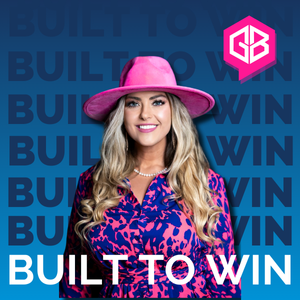
– Stefanie Couch
Founder, Grit Blueprint
P.S. Head over to ChatGPT and search for your company. If you don’t like what you see, don’t panic. That’s not a failure. That’s a starting point. The companies winning in AI search right now aren’t smarter than you. They just started sooner. You can still catch up… But you have to start.